You own the
data product.Meet the analyst
you never had.
Decision Formula knows where data products go wrong, from decades of real project experience. It pulls together what is scattered across people, documents and systems into one definition, and shows you what is still missing.
The problem
Defining a data product is hard.
You are the middle point between the business and the data. Everything has to pass through you.
-
 The business knows what it wants. Roughly.
-
 The data teams know what exists. Roughly.
-
 Every team has its own definition of the same KPI.
-
 Questions get asked, forgotten, and asked again three months later.
-
 Decisions live in meeting notes, chat threads and half-finished documents.
-
 Someone has to pull the story together. That someone is you.
AI made producing documents easy. Knowing what belongs together, what’s missing and what hasn’t been decided is still hard. And still yours.
How it works
It reads. It structures. It asks. It shows you what’s missing.
Not another assistant that writes you a document. Decision Formula works toward a fixed structure, and it works with the whole team, not one person in a chat window.
- It reads what you already have. Decks, meeting notes, a requirements spreadsheet with three tabs of mock-ups, sample data, a Power BI prototype someone already built. It keeps what matters and filters out the rest.
- It structures it. Not into another document. Into the definition of a data product, from the business outcome down to the datasets. The sorting is its job, not yours.
- It asks. When something is missing, it asks. It reaches out to the people who have the answer, follows up when they go quiet, and keeps track of what is still open. Each answer goes back into the definition.
- It shows you what’s missing. One shared view for business and technical people: what is defined, what conflicts, and what still has to be resolved before you build.
Built for data products
Decades of data project experience, built in.
The structure is what experienced data practitioners carry in their heads: what a data product needs, what usually gets missed, which question to ask when. Decision Formula holds it for you, so you get that experience the first time you use it, whether or not you have it yourself. You don’t fill the structure in by hand. You bring what you have, and the tool fits it to the structure. Just enough detail to find the gaps before delivery.
Business intent
- Objectives
- Questions
- KPIs
- Success criteria
- Consumers
Data
- Source systems
- Datasets
- Definitions
- Grain
- Business rules
Implementation
- Dependencies
- Ownership
- Integrations
- Lineage
- Outputs
Readiness
- Evidence
- Assumptions
- Conflicts
- Open questions
- Accepted risks
Why Decision Formula
It knows when something doesn’t add up.
Data products fail in specific ways. A reasonable request hides a grain mismatch. Two markets define the same KPI differently. A source system nobody mentioned turns out to be load-bearing.
It doesn’t just collect what you tell it. It asks what an experienced data practitioner would ask.
- What is this product for, and how will we know it worked?
- Does everyone define this KPI the same way, at the same grain?
- Which source systems does this really depend on, and who owns them?
- Where are we assuming without evidence?
- Whose input is still missing?
- What changed since last week, and what no longer holds?
The result isn’t more documentation. It’s a definition clear enough to build from.
What you get back
Get your time back for the decisions only you can make.
The meeting recaps. The write-ups. Chasing people for answers, chasing decisions, and keeping the list of what is still open in your head. Decision Formula takes that off your plate, so your time goes where it makes the most difference.
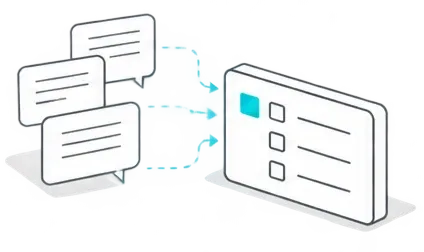
Decide what to build. Get people behind it.
Time with sponsors, markets and users, not with documents.
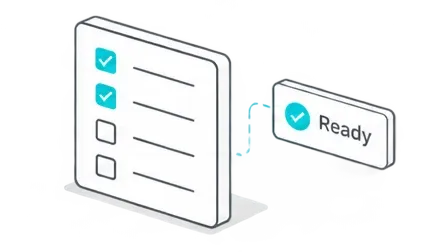
Know if the definition is ready
When your boss or the steerco asks, you already have the answer.
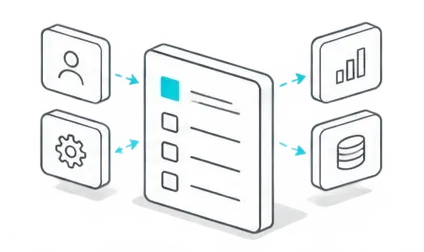
Hold delivery to a definition
One definition. Internal team or vendor, everyone builds to it.
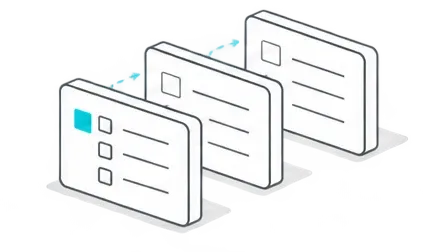
Make the next one easier
What you defined and learned carries into the next product, and to the next owner.
The platform
What it does for you.
It starts from your documents and your data catalog, gets answers from the people who know, and keeps every change visible. Then the definition goes to each team, and to the coding agents, in the form they build from.
For data and AI leaders
Give your data product owners the analyst they never had.
Transcribing the meeting is not the same as knowing what to build. Your teams already have the summaries. What is slow is turning them into one definition everyone can build to, and that is where the time goes.
- One way to define every data product, so you can see which ones are ready to go.
- Assumptions and accepted risks visible before money is committed.
- Vendors and internal teams held to the same definition.
- Prevent expensive surprises during delivery.
Enterprise ready
Built for enterprise data teams.
Identity, access, ownership, traceability and security are built for the environments your data already lives in.
Data ownership
Your data remains yours.
Customer data is never used to train foundation models.
Enterprise deployment
Already used by Fortune 500 teams.
Running inside enterprise environments today, not in pilot-only form.
Authentication
- SAML / Enterprise SSO
- Role-based access
Governance
- Traceable decisions
- Evidence lineage
- Auditability
Security
- Encrypted in transit and at rest
- Enterprise cloud infrastructure
- SOC 2 program underway
Bring a data product you are defining right now.
See what Decision Formula finds in it. Run a pilot on one real data product, measure the difference, and decide from there.